Navigating Disabilities
Guidance for families navigating the unique complications and rewards that come with raising a child with disabilities.
Understanding the Kansas HCBS Waivers
February 4, 2021
Medicaid programs offer a series of Home and Community Based Service (HCBS) waiver programs that are designed to provide services and supports to individuals with special needs which allow them to maintain in their home and community and avoid institutionalization. In the state of Kansas, there are seven HCBS waivers, each with their own individual requirements and services based around the specific needs of the individual.
Eligibility: each waiver has a set of requirements for eligibility based on the specific nature of the waiver. All waivers require that the individual on the waiver qualify for Medicaid services financially. An important piece to remember is the requirement only looks at the individual’s assets and income, not the family as a whole. This stands true even for children on the waiver. If the individual has income and assets that could impact their eligibility, you may want to consider the formation of a special needs trust which allows them to have income and assets held in trust so they do not impact their eligibility for social service programs.
The Waivers:
Eligibility: each waiver has a set of requirements for eligibility based on the specific nature of the waiver. All waivers require that the individual on the waiver qualify for Medicaid services financially. An important piece to remember is the requirement only looks at the individual’s assets and income, not the family as a whole. This stands true even for children on the waiver. If the individual has income and assets that could impact their eligibility, you may want to consider the formation of a special needs trust which allows them to have income and assets held in trust so they do not impact their eligibility for social service programs.
The Waivers:
- Physical Disability (PD) Waiver – serves individuals age 16 to 65 who meet the criteria for nursing facility placement due to their physical disability. Learn more about the PD Waiver here: pd-waiver-fact-sheet-1-28-19.pdf (ks.gov)
- Frail Elderly (FE) Waiver – an alternative to nursing home care for Kansas seniors that promotes independence within the community. Learn more about the FE waiver here: fe-waiver-fact-sheet-1-28-19.pdf (ks.gov)
- Brain Injury (BI) Waiver – serves individuals age 16 to 65 who have a documented medical diagnosis of an acquired or traumatic brain injury that has caused injuries that would continue to improve with the intensive brain injury therapies, and would otherwise require institutionalization in a TBI Rehabilitation Facility. Learn more about the BI waiver here: bi-waiver-fact-sheet.pdf (ks.gov)
- Autism (AU) Waiver – provides support and training to parents of children with an Autism Spectrum Disorder diagnosis to help ensure children with ASD can remain in the family home. Learn more about the AU waiver here: au-waiver-fact-sheet-2-4-19.pdf (ks.gov)
- Intellectual/Developmental Disability (I/DD) Waiver – serves individuals 5 and older who meet the definition of intellectual disability, having a developmental disability, or are eligible for care in an Intermediate Care Facility for Individuals with Intellectual Disabilities. Learn more about the I/DD waiver here: idd-waiver-fact-sheet.pdf (ks.gov)
- Serious Emotional Disturbance (SED) Waiver – serves individuals age 4 to 18 with diagnosed mental health conditions that substantially disrupts the child’s ability to function socially, academically, and/or emotionally. Learn more about the SED waiver here: sed-waiver-fact-sheet-9-18-19.pdf (ks.gov)
- Technology Assisted (TA) Waiver – serves individuals age 0 through 21 who are chronically ill or medically fragile and dependent upon a ventilator or medical device to compensate for the loss of vital bodily function. Learn more about the TA waiver here: ta-waiver-fact-sheet-5-14-19.pdf (ks.gov)
|
How to Apply:
You can apply for the KanCare waivers online at Self Service Portal Home Page (ks.gov) or through a paper application available here: Apply for KanCare (ks.gov) The KanCare HCBS Access Guide is a great resource to prepare you for the application process and what to expect as you navigate the system: consumer-access-guide-to-hcbs-services-in-kansas650064a0172e66d690a7ff00009edf98.pdf (ks.gov Waitlists:
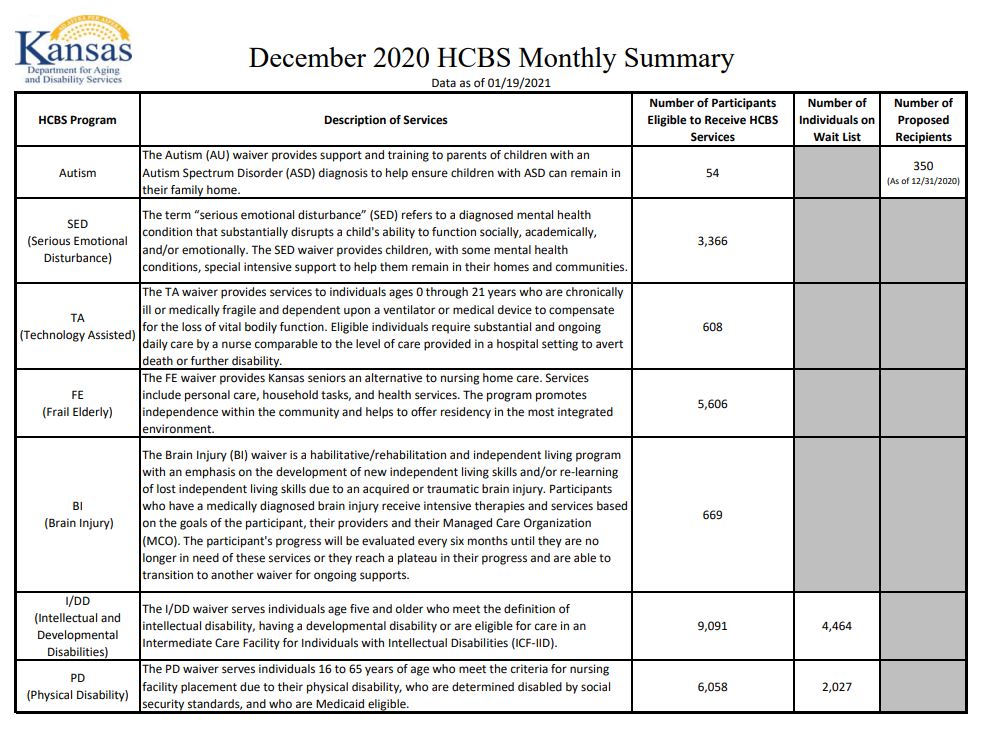
While many of the waivers in Kansas have no waitlist, the two most common waivers, PD and I/DD, both have significant waitlists before services can be provided. The Kansas Department for Aging and Disability Services (KDADS), the state agency that administers KanCare waivers, releases a report monthly summarizing the individuals on each waiver in Kansas and the number of individuals on the waitlist in Kansas. As of December, 2020, there were nearly 4,500 individuals on the waitlist for the I/DD waiver and over 2,000 individuals on the waitlist for the PD waiver. |
What about Missouri? Missouri has a similar list of Medicaid waivers to allow those with special needs to continue to remain in the community. Those waivers can be found on the Missouri Department of Social Services website: MO HealthNet Division Waiver Page | Missouri Department of Social Services, MO HealthNet Divisio
Preparing for Adulthood through a Guardianship
December 23, 2020
|
Parents of children with special needs or disabilities have additional considerations when their children turn 18. While these children are becoming adults and can therefore make their own medical, financial, and living arrangement decisions, they may not be mentally capable of safely doing so.
If your child has special needs or disabilities that prevent them from meeting their essential needs for their health, safety, or welfare or an inability to manage their own finances, you may want to consider filing a petition to obtain a guardianship over your child when they reach age 18. As a legal guardian of an adult with an impairment, you can continue to ensure your adult child’s medical, living, financial, educational, and support needs are being met. |
In the months leading up to your child turning 18, you will want to prepare for a guardianship proceeding by taking the following steps:
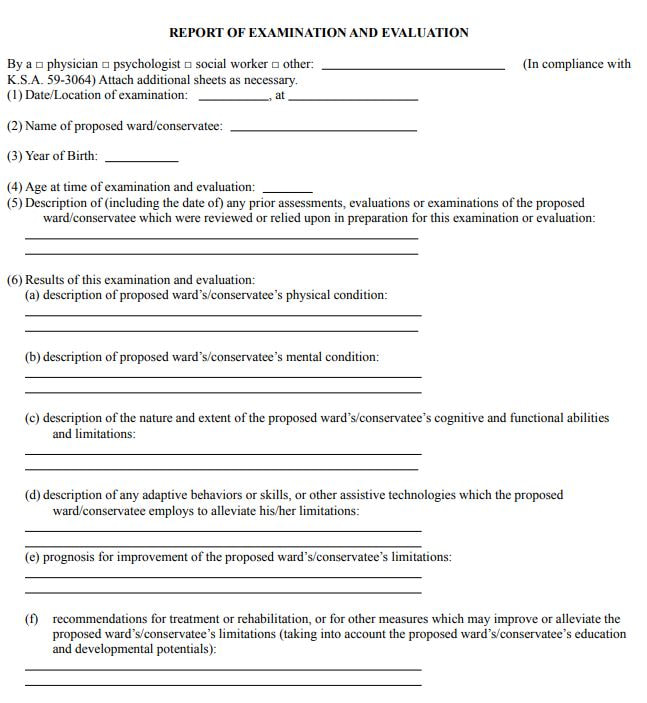
- Obtain a capacity evaluation of your child within the 6 months before your child turns 18. A capacity evaluation can be completed by your child’s physician, psychiatrist, psychologist, or through their CDDO. It is beneficial to use the statutory form for capacity evaluations to ensure the professional is providing sufficient information to support the appointment of a guardian.
- Determine who will act as guardian(s) for your child. Do the parents both wish to be named as co-guardians with the ability to act independently of one another? Also consider the appointment of a standby guardian that can step in to make decisions should the guardian(s) be unavailable or unable to do so.
- Review the Basic Instructional Program for Guardians, available here. In order to be appointed as a guardian for your child, you will be required to have reviewed this material and be familiar with its contents. This document will also assist you in understanding your role and duties as a guardian.
- While legal counsel is not necessary to file guardianship pleadings, you should consider contacting an attorney that routinely handles guardianship matters to assist you through the process, complete the legal pleadings necessary for the appointment, and to guide you through the hearing.